Per vial, USD
| Fill weight | 100+ | 1,000+ | 2,500+ | Order |
|---|---|---|---|---|
| 10 mg | $13.50 | $11.34 | $11.07 |
Ordering at volume
The first thing to get right on this line is which of the two melanocortin peptides you are actually ordering. PT-141 and its amide neighbour differ by about one unit of mass, share a ring, and are frequently listed side by side under names that look alike on a purchase order. Order by the code on the catalog line rather than by name, and check the code again on the quote before it is countersigned; a substitution caught at quote costs nothing, one caught in goods-in costs a return.
Making the material has the same shape as any small ring peptide — assemble, close, purify — and it is the closing and the purification that follows, not the seven couplings before them, that set yield and therefore the rate a thousand vials is quoted at.
Unlike its neighbour, this line carries one published fill of 10 mg, so every vial ordered lands on the same line and the break follows that count alone. It is standard catalog depth, held in California and shipped on the normal weekday schedule, and the certificate names the lot in the carton rather than a representative batch.
Specification
- Compound
- PT-141
- CAS number
- 189691-06-3
- Formula
- C₅₀H₆₈N₁₄O₁₀
- Molecular weight
- 1,025.2 g/mol
- PubChem CID
- 6918280
- Form
- Lyophilized powder, sealed vial
- Fill weights
- 10 mg
- Stock depth
- Standard catalog — Stocked in California. Each compound gets its price break on its own count.
- Intended use
- Laboratory research only. Not for human or veterinary use.
What the material is
PT-141, catalogued in places as bremelanotide, belongs to the melanocortin class and is a cyclic peptide of seven residues. It is the free-acid counterpart of the Melanotan II structure: the same seven-residue ring, terminating in a free carboxylic acid where the other molecule carries an amide. That single difference puts the two barely a mass unit apart, and the catalog figure of 1,025.2 g/mol sits directly beside its neighbour on the shelf.
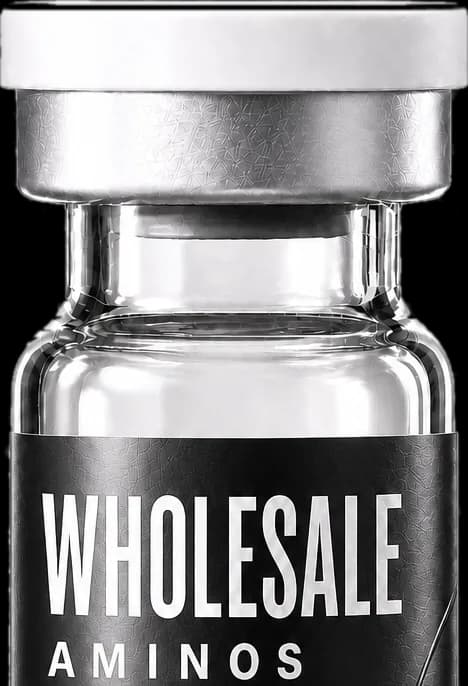
The material comes as an off-white lyophilized solid, crimp-sealed in glass over a rubber closure. A free terminal acid gives the molecule an ionisable group that its amide counterpart does not have, which is the practical reason the two behave a little differently in a buffer despite sharing a backbone. In the sealed vial that difference is invisible, which is exactly why identification rests on the code printed on the label and not on the look of the solid.
Storage and reconstitution
Sealed vials belong at −20 °C and dry, with the carton keeping them protected from light. Material under an intact crimp tolerates the warming that happens in transit; what it does not tolerate is a compromised seal, so a lifted stopper or a dented crimp is reason to set a vial aside rather than to shelve it with the rest.
The solid dissolves cleanly in sterile water, and a buffer matched to the assay serves just as well. Keep the dissolved material cold and dark and work through it quickly; freeze-thaw cycles are the fastest way to lose material, so aliquot anything that will be drawn on more than once.
Buying questions
How do I make sure I am ordering PT-141 and not the amide form?
Order against the catalog code rather than the name, and confirm that code on the written quote before it is signed. The two molecules sit about a mass unit apart and their names are easy to transpose on a purchase order, so the code is the field to check twice.
Why is PT-141 not priced like a plain seven-residue peptide?
Because closing the ring is a separate step once the chain exists, and the closed product then has to be purified away from whatever stayed open. Those steps lower yield per run, and yield is what feeds the per-vial rate. Residue count is a poor predictor of cost on ring peptides generally.
Does PT-141 come in more than the 10 mg fill?
One fill is stocked. That keeps the tier arithmetic simple, since every PT-141 vial on the order counts toward the same break with nothing to allocate between sizes. If a different fill would suit a large commitment, ask when you request a quote and we will confirm what can be arranged.
What documentation comes with a PT-141 lot?
A certificate of analysis for the lot, on request, and a safety data sheet on the same terms. The certificate identifies the lot actually shipped, so it can be matched against the printing on the vials in the carton. COA requests is where to ask.
